
Rendang achieved global recognition— in 2011 it was named by CNN International as the “World’s Most Delicious Food.” Rendang is very synonymous with the Hari Raya celebrations. A dish that will never be forgotten and is always in view. Whether it’s Hari Raya Aidilfitri or Hari Raya Aidiladha, rendang will definitely be among the main menus besides ketupat and nasi impit. Rendang isn’t just served for celebrations, but commonly served at large gatherings, wedding banquets and as a lunch dish.
But did you know, Rendang has many types and is usually cooked in unique ways depending on the different states in Malaysia. Let’s look at some of the popular rendang variation around the region of Malaysia & Indonesia.
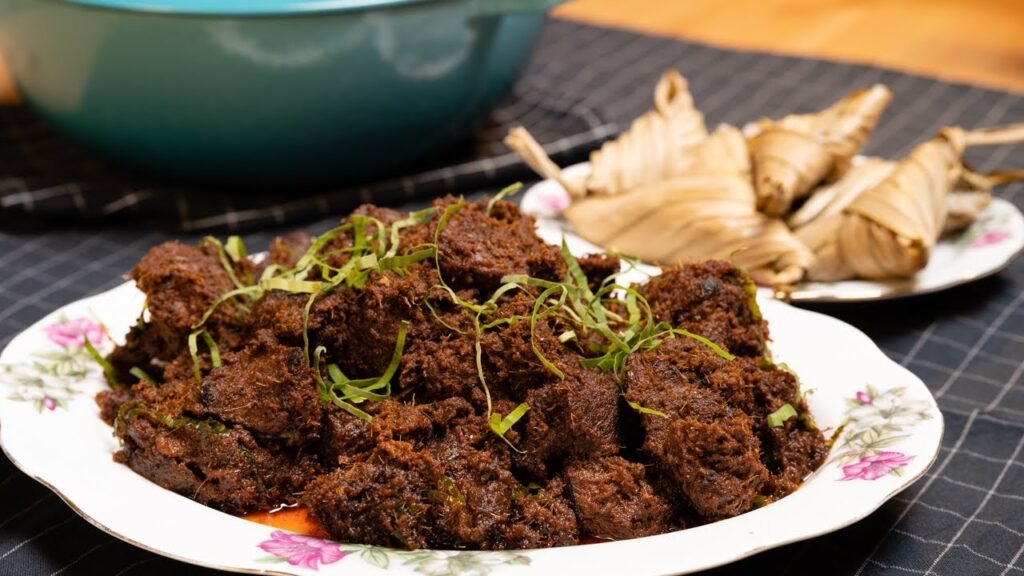
Rendang Tok – Perak
This is said to originate from Kampung Pisang, Batu Gajah, Perak. Not only loved and known there, but also by various layers of society because its taste is very good. The name “Tok” comes from the male old folks (grandfather) who cooked this rendang and were addressed by the nickname ‘Tok’ in Malay language, and also to remember their services; they were very skilled in cooking rendang tok in the traditional way using wood-fired stove.
Traditionally rendang tok used buffalo meat (kerbau) which is more fibrous and sweet. But it also commonly cooked with beef (daging lembu) which is easier to obtain nowadays. Rendang Tok is a must-have menu for people of Perak. Every celebration, rendang tok will be the main menu. This rendang variety is darker in color, drier less wet, resembles filaments tender pieces of meat with spices coated on top.
Now rendang tok is very popular, become the widely known version of rendang worldwide and has become a legacy passed down and will not fade with time. It is also quite similar and often mistaken with Rendang Padang which is the popular Indonesian version.
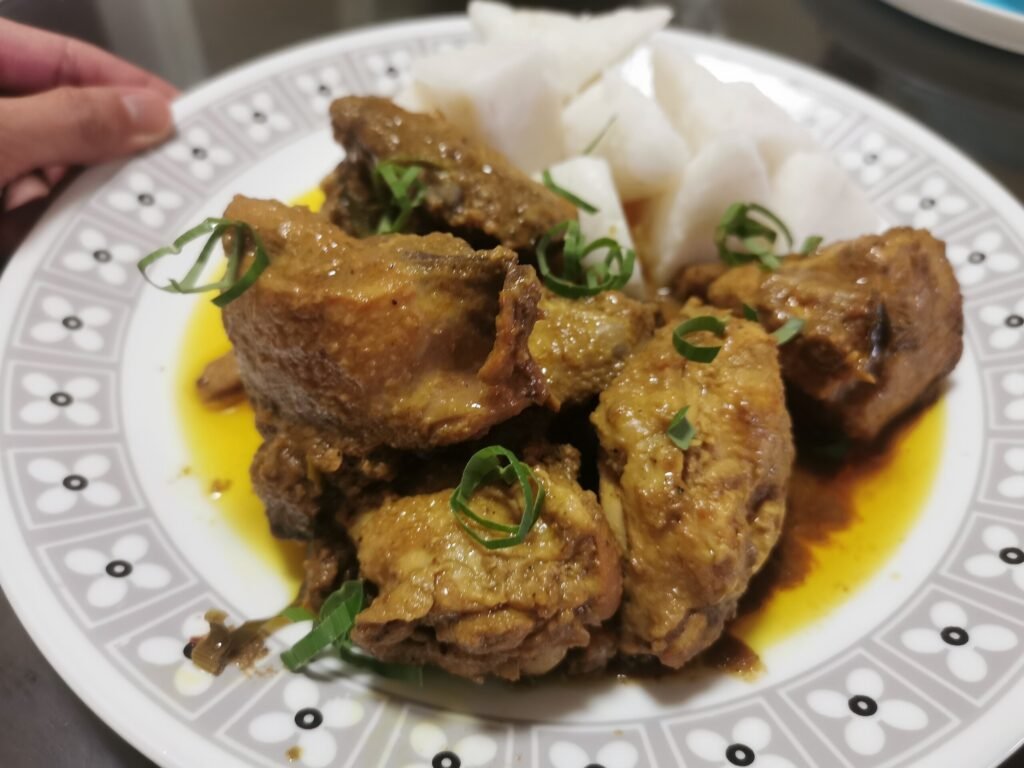
Rendang Minang – Negeri Sembilan
Another popular rendang comes from Negeri Sembilan introduced by the Minangkabau community, hence the name Rendang Minang. Rendang Minang originated among the Minangkabau people and was developed as a long-cooking meat dish that used coconut milk and rich spices so that the meat would be preserved for travel or ceremonies. Because the Minangkabau had a tradition of merantau (migration/travel) where a big community reside in Negeri Sembilan state, rendang became prized for its durability and the cultural value attached to communal meals and rituals.
Usually the cooking process of rendang minang takes a very long time. Rendang Minang differs from other types of rendang by its color less darker and more yellowish in color, slightly wetter (can adaptable to being more saucy), aroma and taste and also uses many bird’s-eye chillies (cili api). For the people of Negeri Sembilan, during every celebration, rendang minang must be present; if not, it’s not a proper celebration!
Distinctive characteristics between Malaysian variant vs Indonesian variant:
The Indonesian Minang version is a more traditional version whereby there are less influence of other cultures (hence, rarely you will find recipes that uses whole seed spices in Indonesian version of Rendang Minang).
The Malaysian variant often reflects a local adaptation: it may be less intensely cooked to dryness, use of slightly different spices that is influenced by other cultures to balance, and served in a wetter style.
The Indonesian version carries stronger ties to ritual and culture (e.g., served during adat ceremonies among Minangkabau) and emphasises preservation qualities, whereas the Malaysian variants may emphasise flavour rather than preservation and reflect Malay Peninsula influences.
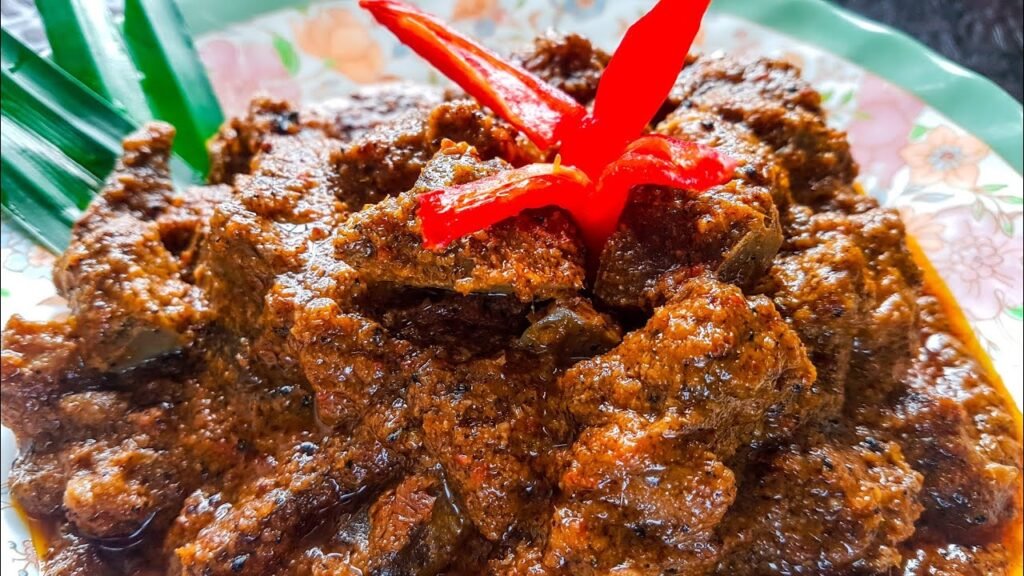
Rendang Opor – Pahang
Rendang Opor is a special rendition of rendang from my hometown Pahang, Malaysia. It is often described as a richer, more elaborate version of the traditional rendang because of its unique spice mix and method. The dish takes considerable time to cook—commonly over 5–6 hours—to allow the meat to become tender and the spices to fully integrate.
Key characteristic of using rempah “opor” (a specialised spice blend) plus ingredients like belacan (shrimp paste), tamarind/asam jawa, lemongrass/serai, and gula nisan (gula Melaka). Though similar in cooking style to other rendangs (long slow cook, coconut milk base, spices), rendang Opor often has a wetter consistency initially and is stirred frequently to avoid burning; also served with plain rice, ketupat, lemang or nasi minyak.
This rendang dish also strongly embedded in Pahang’s festive and banquet cuisine—weddings, open houses, Hari Raya—giving it both cultural and ceremonial significance.
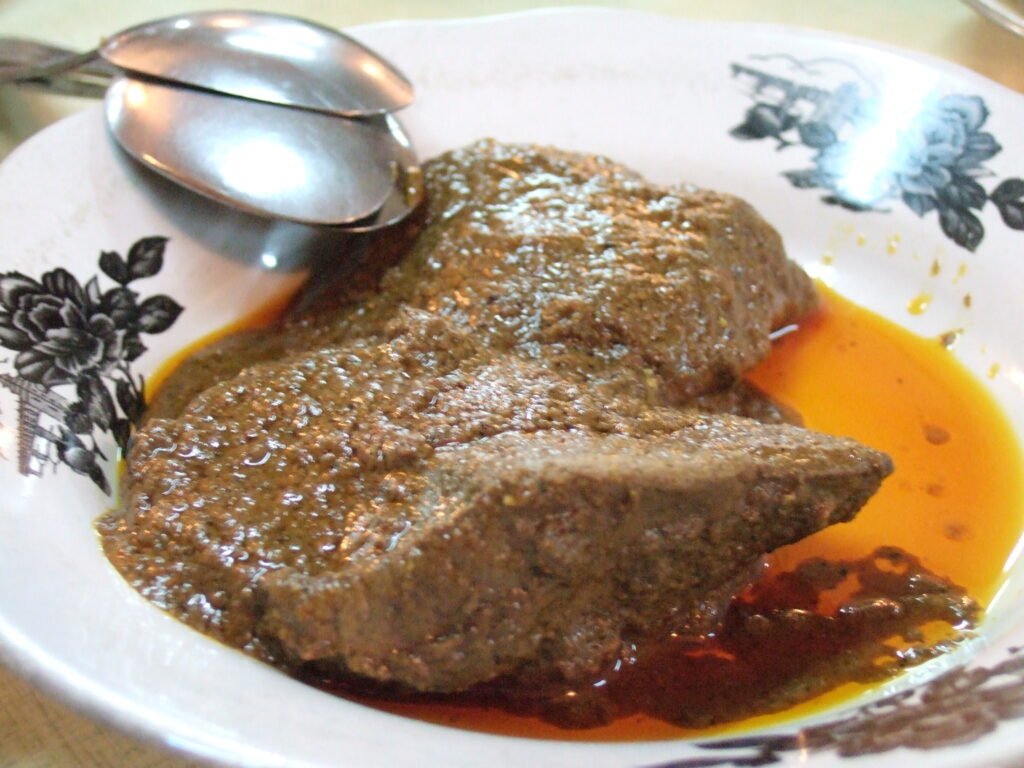
Rendang Hati – Johor
The Johor rendang is slightly different from other states because it usually uses beef liver (hati lembu) cooked using soy sauce (kicap). The beef liver should not be cooked too long because it will become hard. The beef liver chosen must also still be red to avoid less pleasant smell. However, for those who don’t favour inner parts of animals / beef liver, it can be replaced with beef or chicken.
Rendang hati is a recipe passed down among the Johor community. Each time during celebrations, open houses or large gatherings, rendang hati frequently becomes the main dish. Rendang hati is suitable to eat with rice, ketupat, lemang and also nasi impit.
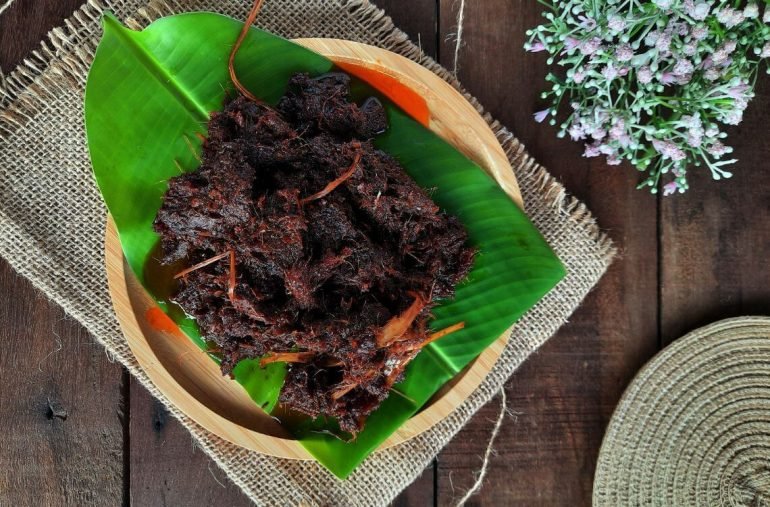
Rendang Dendeng – Perak
In Perak, rendang dendeng is a special variation of rendang which bridges the concepts of rendang and dendeng (a type of dried, thinly-sliced meat). It’s distinct from the usual rendang in method and texture. The meat is typically pounded or thinned before cooking so that the spices penetrate more deeply.
Because of that thinner meat and the method of cooking (often without or minimal coconut milk, and often nearly dry), it also becomes suitable as a snack or travel-friendly dish (its storage life is longer than wetter rendang). You can find it in ready-to-eat packs marketed for travel or as snacks all around Malaysia.
In addition to being served as a festive main dish (especially during Hari Raya and large gatherings), it’s increasingly regarded as an ideal snack or side dish because of its firmer texture, deep flavour and ease of reheating/eating. Highlight to learn it in our cooking class.
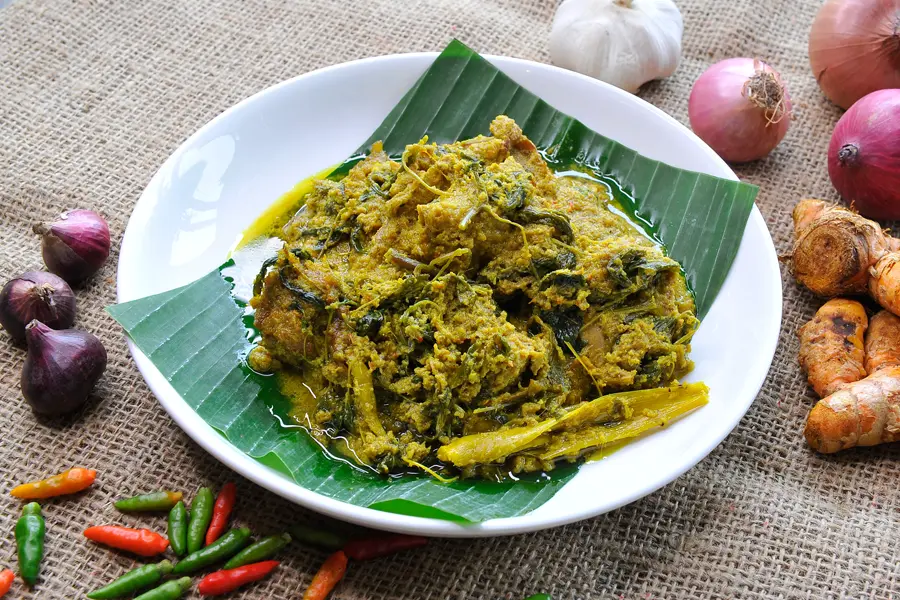
Rendang Maman – Negeri Sembilan
Besides rendang Minang, Negeri Sembilan is also known for a unique rendang from Gemencheh town (in Negeri Sembilan state) where the traditional slightly-bitter local wild leafy vegetable called maman (scientific name Cleome gynandra) is the star ingredient.
The story goes that in Gemencheh, maman is widely harvested and used in local dishes. It is common enough that the dish “Rendang Maman” has become synonymous with the area and is considered an essential menu item for festivals and large gatherings and also listed as part of the unique food heritage of the region. So when you talk about rendang maman, you’re talking about a dish rooted in the local culture of Gemencheh: the harvesting of the maman leaves, the cooking methods passed down there, and the communal festivals where the dish is served. It has become a kind of food-identity marker for Gemencheh.
The maman vegetable is a component often used in local cuisine and becomes the main ingredient in this rendang. Rendang maman is cooked together with coconut milk and bird’s-eye chillies, producing a balanced combination of spiciness and richness. This rendang can also easily become a vegan / vegetarian friendly version of rendang that is both unique yet traditional to try.
Why it’s gone viral among Malaysian locals recently
One reason is that the maman leaf is somewhat novelty outside the region: many Malaysians from other states may not have encountered it, so rendang maman stands out. For example on Reddit someone wrote about their Negeri Sembilan friend bringing it to Shah Alam after Raya and others had never tried it.
Secondly, the dish has been commercialised and marketed more widely (ready-to-eat packs, branded versions) which gives broader exposure beyond its regional roots.
Third, the festivals & media help: articles and food-culture segments emphasise the uniqueness of the dish and its link to Gemencheh, giving it a “food tourism” or “local speciality” status. This creates social media interest and local pride campaigns.
Finally, health/heritage trends: the use of local wild vegetable, the “authentic” twist to rendang, appeals to those wanting regional flavours and not just the standard rendang. So the “viral” nature comes from novelty, heritage, wider marketing and social media.
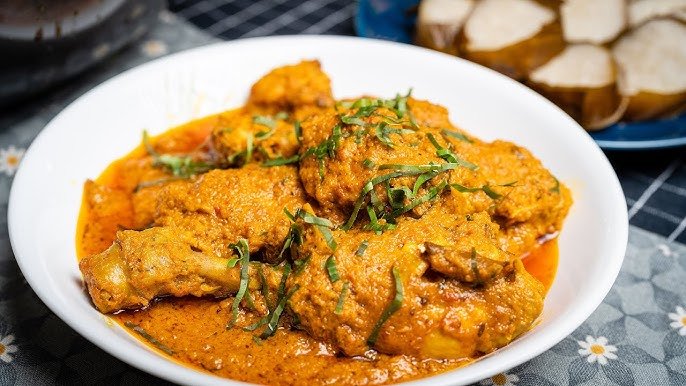
Rendang Ayam Kelantan – Kelantan
This version of rendang from the east coast state of Kelantan features a noticeably wetter texture compared to the drier rendangs of the peninsula, and importantly does not use kerisik (toasted grated coconut paste) in its original form.
What sets Rendang Ayam Kelantan apart is its use of asam gelugor (dried tamarind slices), which imbues the dish with a refreshing sour tang — a flavour influence quite understandable given Kelantan’s proximity to the Thai‐border and the sharing of sour and tropical flavours in its cuisine.
Typically, the chicken is cooked with a spice paste, coconut milk, lemongrass/serai, and asam gelugor, with aromatic leaves (such as daun kunyit or daun limau purut) added near the end. The final dish is slightly saucy, making it ideal to pair with pulut kuning, ketupat or nasi impit — in fact, the more “gravy” style makes it a favourite for communal feasts.

Rendang Daging Hitam – Sarawak
Originating in the state of Sarawak, Rendang Daging Hitam is a distinguished variant of the rendang family, notable for its markedly dark appearance and flavour profile. Unlike many rendangs which rely heavily on coconut milk (santan) for richness, this dish is typically prepared with minimal or no santan, and instead uses thick sweet-soy sauce (kicap pekat) and a dense spice blend to achieve its signature deep, glossy black colour and intense aroma.
The cooking process for Rendang Daging Hitam often involves slow-simmering the beef in the spice mix, garlic, ginger, galangal, lemongrass, and dark soya sauce, until the liquid has reduced significantly and the meat is thoroughly infused with the glaze-like sauce. The result is tender beef pieces steeped in richly spiced, slightly sweet-savory, and aromatic dark sauce.
Culturally, this rendang holds a special place in Sarawak’s festive cuisine. It is “among the must-have menus every celebration, banquet and occasion” for the local community. It is commonly served alongside white rice, lemang, kelupis or nasi kuning — making it a celebratory dish that unites family and guests in big gatherings.
The dark hue of the dish — far from being simply a result of added colouring or soy-only — is the result of extended cooking time and careful reduction of liquids and oxidation of the spice oils, giving it depth and complexity.
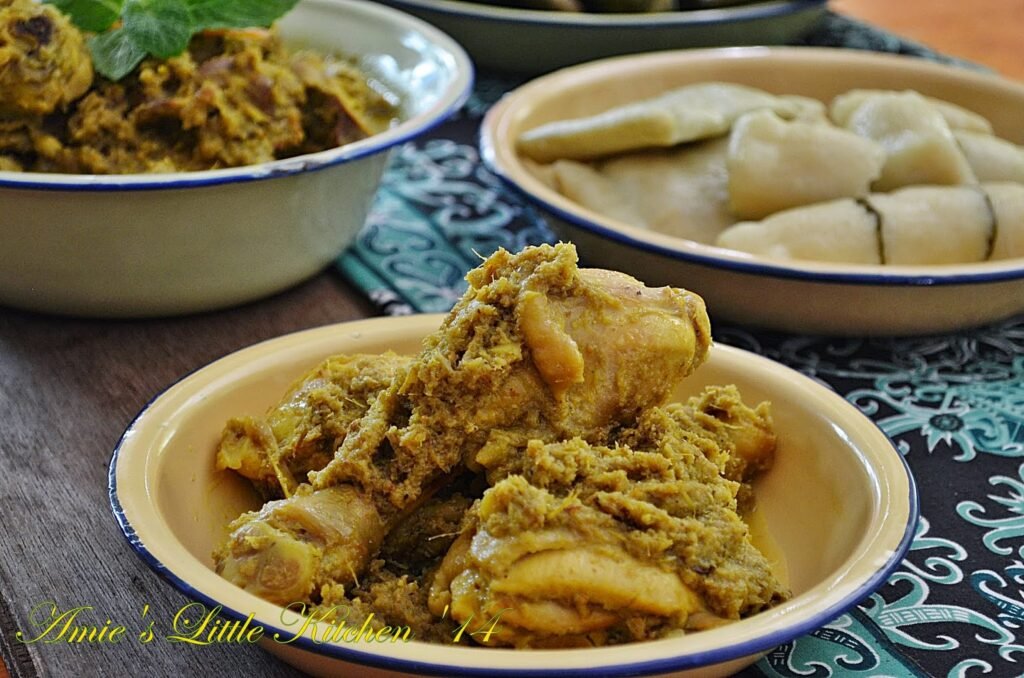
Rendang Ayam Lengkuas / Ayam Masak Likku – Sabah
This menu is a heritage dish and one of the traditional dishes of the Bugis community and from the ancestors of the people in Sabah. This rendang is always a popular dish and delicious to eat with rice, pulut, lemang, ketupat nasi, buras or even bread. This rendang is also suitable to be served at ceremonies, weddings, thanksgiving and festivals.
There are two types of rendang ayam lengkuas: wet (basah) version and dry (kering). It’s up to individual taste to eat the wet version or the dry version. This rendang usually uses village free-range chicken (ayam kampung). But you can also use commercial meater chicken or regular chicken. This rendang uses a lot of galangal (lengkuas) as the star ingredient similar to Baba Nyonya version of Kari Kapitan and is not spicy. This menu is a must‐have among the Bugis people at every Hari Raya celebration. Also popular under the name ‘Nasu Likku’ among the community there: ‘Nasu’ means cook, and ‘Likku’ means galangal.
